Support Center
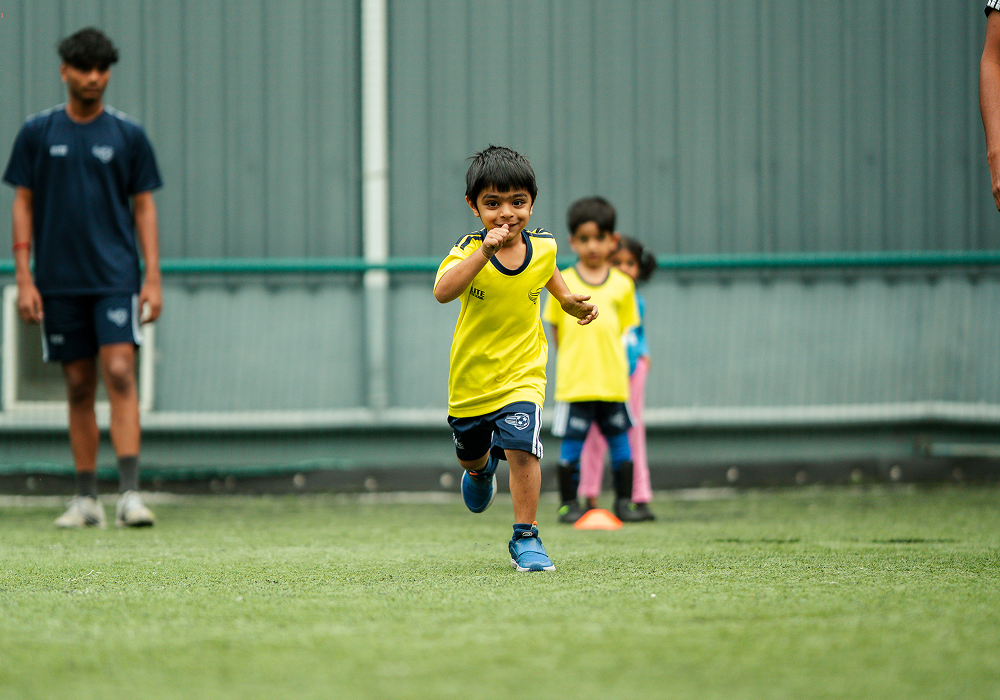
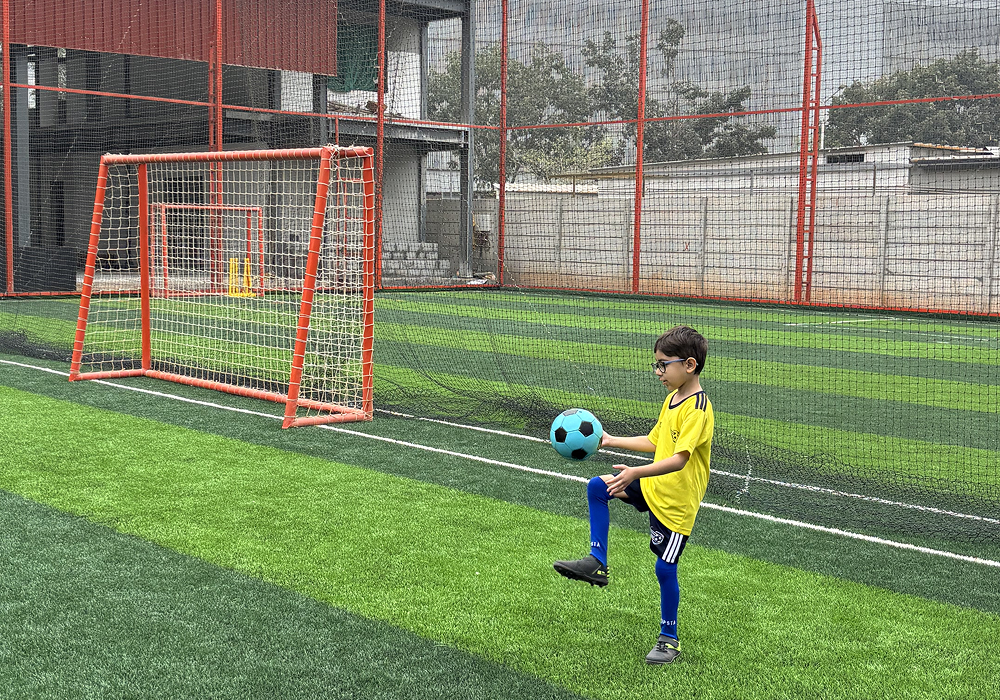
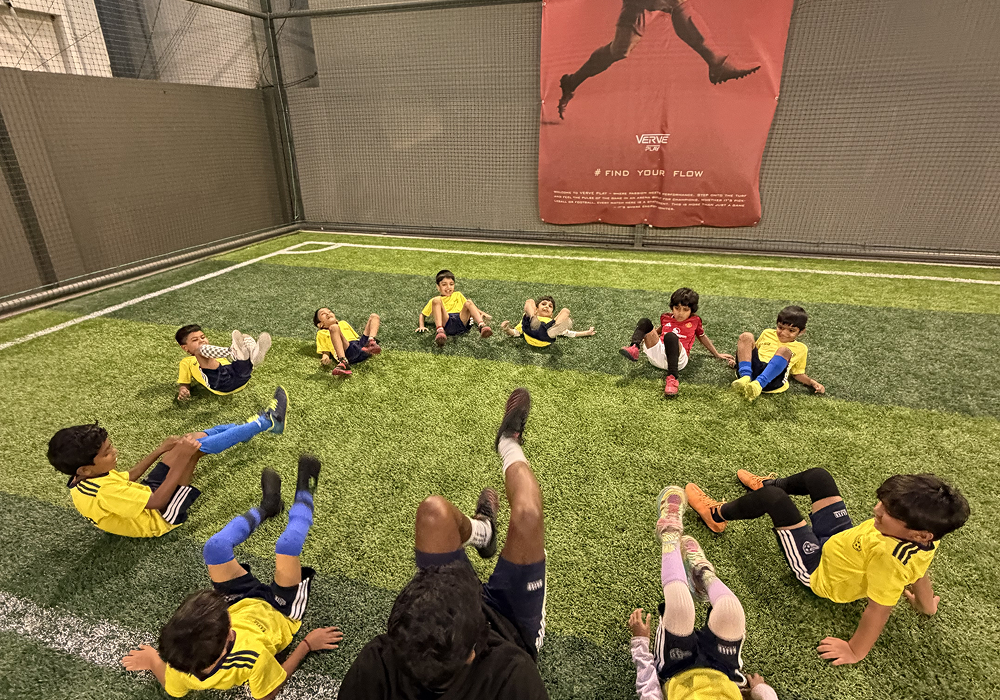
For ages 3-5, football training should be playful and confidence-building focused on movement and ball comfort, not competition.
- Fun games with the ball
- Running, jumping, balancing drills
- Obstacle courses
- Ball familiarity activities
- Parent-kid engagement sessions
Goal at this age:
- Love for football ❤️
- Confidence on the field
- Basic coordination
We avoid pressure, shouting, or rigid drills learning happens through play.
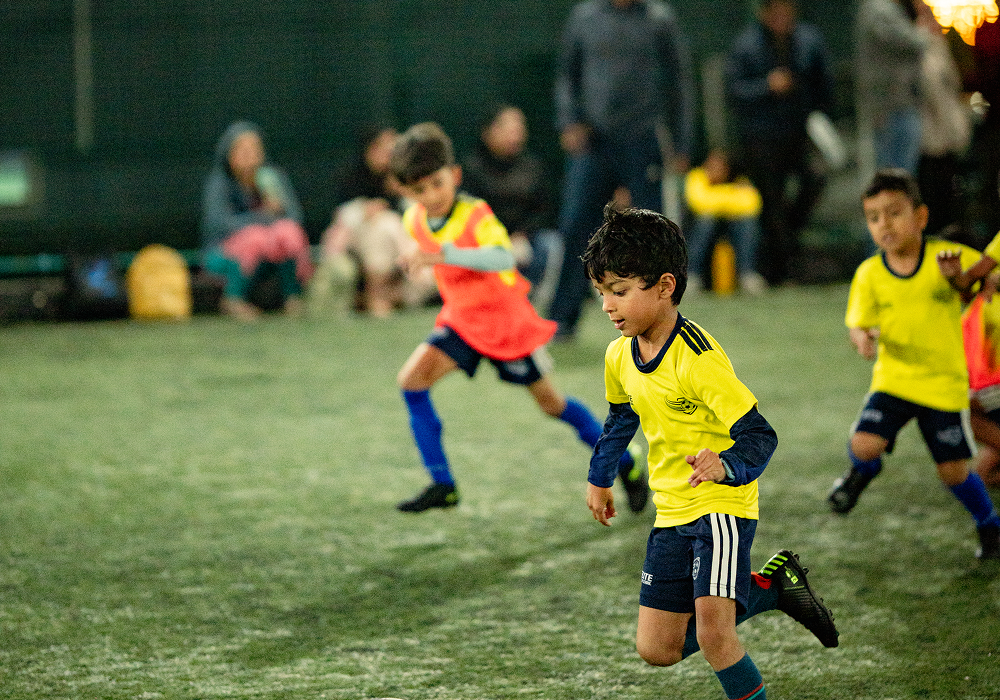
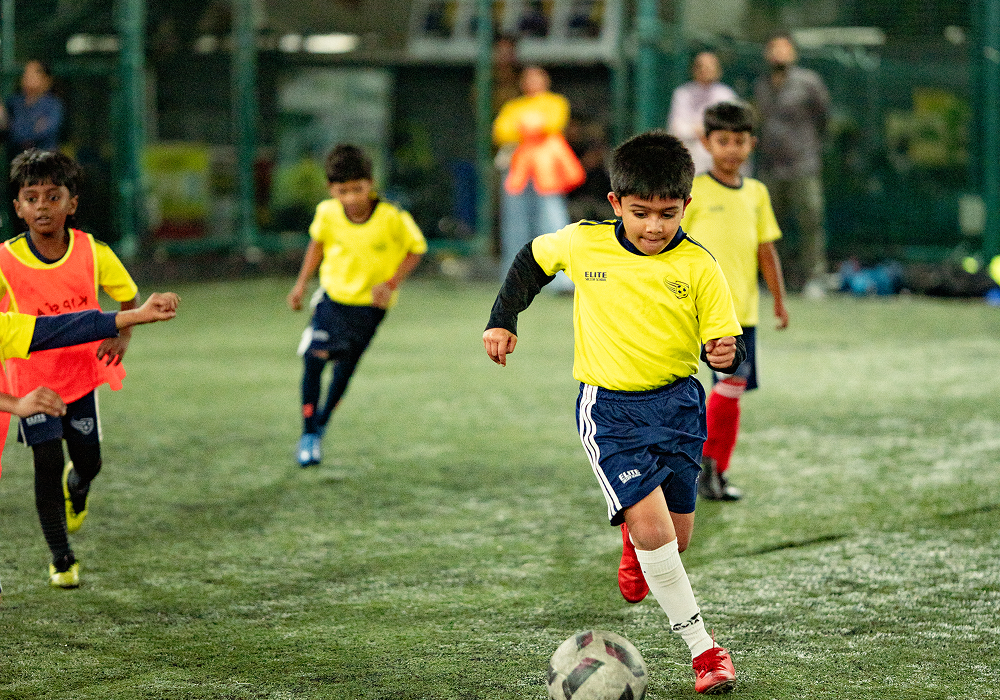
Ages 6-9 are the “Golden Learning Age” kids absorb techniques quickly and build strong fundamentals.
Training includes:
- Dribbling techniques
- Passing & receiving
- Turning & ball control
- 1v1 attacking & defending
- Small-sided matches
Focus areas:
- Technique development
- Decision making
- Game awareness
- Teamwork introduction
Kids start understanding positions, spacing, and teamwork.
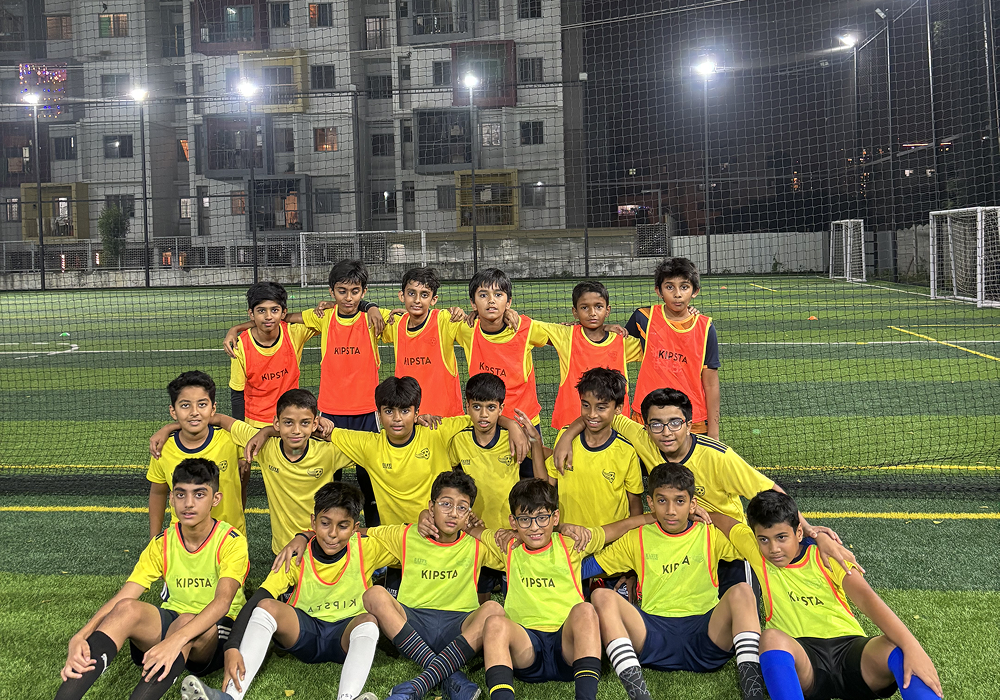
From age 10+, training becomes structured and performance-oriented built for competitive growth and pathway development.
Includes:
- Advanced ball mastery
- Tactical formations
- Pressing & defending shape
- Strength & conditioning
- Match analysis
Focus shifts to:
- Competitive matches
- League participation
- Trial preparation
- Professional pathway building
Football helps children grow physically, mentally, and socially building habits and skills that last beyond sport.
Benefits:
- Improves fitness & stamina
- Builds discipline
- Enhances teamwork
- Boosts confidence
- Develops leadership
- Reduces screen addiction
It teaches life lessons: winning, losing, resilience, and respect.
The ideal starting age is 3-4 years early exposure helps kids develop coordination and natural technique faster.
Why early start helps:
- Faster motor skill development
- Better coordination
- Fearless play
- Natural technique learning
- Early exposure = Long-term mastery
Choose a plan based on your child’s level and goals our packages are structured by training days per week with clear monthly pricing.
Group Training Plans:
- 2 Days / Week: ₹ 3,000 / month
- 3 Days / Week: ₹ 4,000 / month
- 4 Days / Week: ₹ 5,000 / month
- 6 Days / Week: ₹ 6,000 / month
Personal Training:
- PT (Personal Trainer): ₹ 1,500 / 1 hr session
Registration:
- One-time registration fee: ₹ 1,500
- Includes: 1 set of uniform
For more details, visit the Packages page.
Football doesn’t reduce academics when structured well, it improves focus, discipline, and study performance.
Football enhances:
- Concentration
- Time management
- Discipline
- Brain function
- Memory retention
Active kids often perform better in studies.
At age 3, training is about movement, listening, and confidence football basics are introduced through play.
Learning outcomes:
- Running with the ball
- Stopping the ball
- Kicking basics
- Listening to instructions
- Social interaction
- Confidence building
It’s more about movement + fun than football rules.
ESSB follows a structured, age-wise pathway so kids progress steadily from fun learning to competitive football.
Stages:
- Stage 1 (3-5 yrs): Fun & motor skills
- Stage 2 (6-9 yrs): Technical foundation
- Stage 3 (10-12 yrs): Tactical learning
- Stage 4 (13+ yrs): Competitive football
- Stage 5: Elite squads & trials
Structured pathway ensures steady growth.
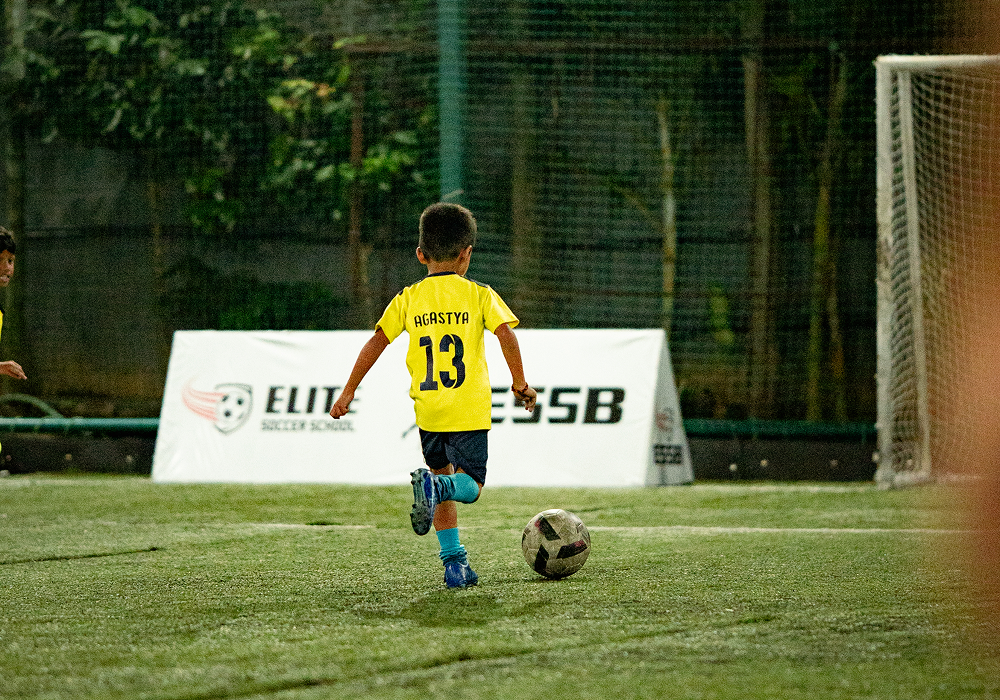
Ages 7-10 build the technical base this is where strong fundamentals are formed for long-term performance.
Key skills:
- Ball mastery
- Dribbling moves
- Passing accuracy
- First touch control
- Shooting technique
- 1v1 gameplay
- Spatial awareness
This age builds the technical base.
Kids learn best when they enjoy fun-based training keeps them engaged and builds long-term love for sport.
Fun training:
- Reduces fear
- Improves retention
- Builds love for sport
- Encourages creativity
- Keeps kids engaged
No fun = No learning at young ages.
Technical training builds “how to play”, while tactical training teaches “when and why to play” both are equally important.
Technical Training (How to play):
- Dribbling
- Passing
- Shooting
- Ball control
Tactical Training (When & why to play):
- Positioning
- Formations
- Game strategy
- Decision making
Both are equally important.
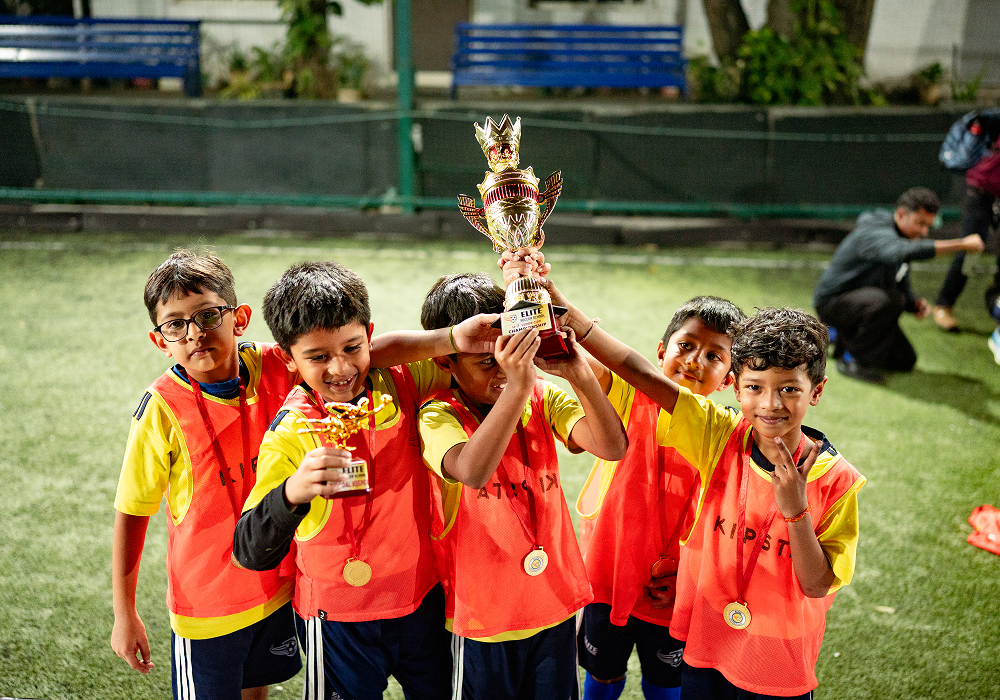
Reaching a professional level needs both skill + exposure ESSB provides a step-by-step pathway and competitive opportunities.
Pathway at ESSB:
- Grassroots foundation training
- Technical development programs
- Elite squad selection
- Tournament exposure
- AIFF accredited trials
- Club & academy scouting links
ESSB provides:
- Licensed coaches
- Structured curriculum
- Performance tracking
- Competitive exposure
- Career guidance
We build both skill + pathway.
Yes when the training is age-appropriate and supervised, football is safe and risk-free for toddlers.
At ESSB we ensure:
- Age-appropriate drills
- Soft balls
- Safe turfs
- No physical tackling
- Fun-based sessions
Safety + supervision = Risk-free learning.
Absolutely football creates a social, supportive environment where shy kids gain confidence naturally.
Football helps shy kids:
- Make friends
- Communicate
- Express themselves
- Celebrate achievements
The field becomes their confidence zone.
100% Yes ✅ Football is for everyone ESSB actively promotes girls football and equal opportunities.
Benefits for girls:
- Fitness & strength
- Confidence
- Leadership
- Equal opportunity
ESSB promotes girls football actively.
That’s exactly why training helps athleticism is built through consistent movement and coaching.
Football develops:
- Agility
- Balance
- Speed
- Stamina
No child is born athletic, they become athletic through training.
Yes when kids play football regularly, outdoor activity naturally replaces screen time and builds healthier routines.
Kids involved in football:
- Spend more time outdoors
- Build active routines
- Sleep better
- Depend less on gadgets
Sport replaces screens.
Choose a plan based on your child’s level and goals our packages are structured by training days per week with clear monthly pricing.
Group Training Plans:
- 2 Days / Week: ₹ 3,000 / month
- 3 Days / Week: ₹ 4,000 / month
- 4 Days / Week: ₹ 5,000 / month
- 6 Days / Week: ₹ 6,000 / month
Personal Training:
- PT (Personal Trainer): ₹ 1,500 / 1 hr session
Registration:
- One-time registration fee: ₹ 1,500
- Includes: 1 set of uniform
For more details, visit the Packages page.
Toddler sessions should be short and engaging long sessions reduce attention and fun.
Recommended:
- 45 to 60 minutes
Structure:
- Warm-up games
- Ball activities
- Fun drills
- Mini matches
- Cool down
Short, engaging sessions work best.
Handling toddlers needs patience, safety, and positive reinforcement our coaches are trained specifically for this age.
Our coaches are trained in:
- Child psychology
- Patience-based coaching
- Positive reinforcement
- Fun drill design
- Safety supervision
We focus on encouragement, never pressure.
This age builds strong fundamentals skills developed here become the base for higher-level football later.
Key skills:
- Ball mastery
- Dribbling moves
- Passing accuracy
- First touch control
- Shooting technique
- 1v1 gameplay
- Spatial awareness
This age builds the technical base.
Tactical understanding grows step-by-step ESSB uses game-based learning so kids understand decisions, space, and roles naturally.
Methods used at ESSB:
- Small-sided games
- Situational drills
- Position rotation
- Match discussions
- Video learning (advanced levels)
Game intelligence develops gradually.
Football builds strong character traits kids learn habits that improve both sport and life.
Football builds:
- Punctuality
- Respect for coaches
- Team responsibility
- Emotional control
- Leadership
Kids learn accountability and work ethic early.
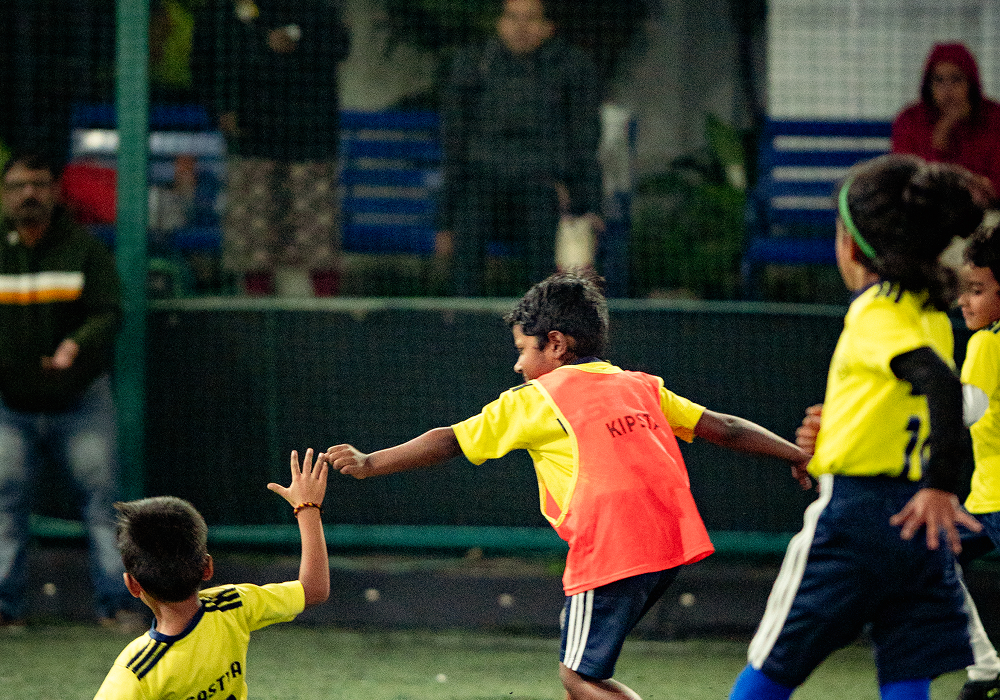
Matches and tournaments accelerate growth kids learn real game confidence and decision-making under pressure.
Matches develop:
- Confidence
- Game understanding
- Team bonding
- Competitive mindset
- Pressure handling
Kids learn more in 1 match than 5 practice sessions.
Every sport is beneficial, but football stands out for fitness, coordination, and decision-making because it’s continuous and full-body.
However football offers:
- Continuous movement
- Higher fitness levels
- Full-body coordination
- Faster decision making
It’s one of the most physically complete sports.
Football improves coordination by training the body to react, balance, and control movement in real time skills useful beyond sport.
Football enhances:
- Foot-eye coordination
- Balance control
- Body movement sync
- Reaction time
- Spatial awareness
This helps not just in sports, but daily life activities too.
Still have questions?
If your question isn't listed here, feel free to contact us or start a live chat with our team. We're happy to help!
Get Call Back
Follow us on @elitesoccerschool